

how long to pressure cook green beans

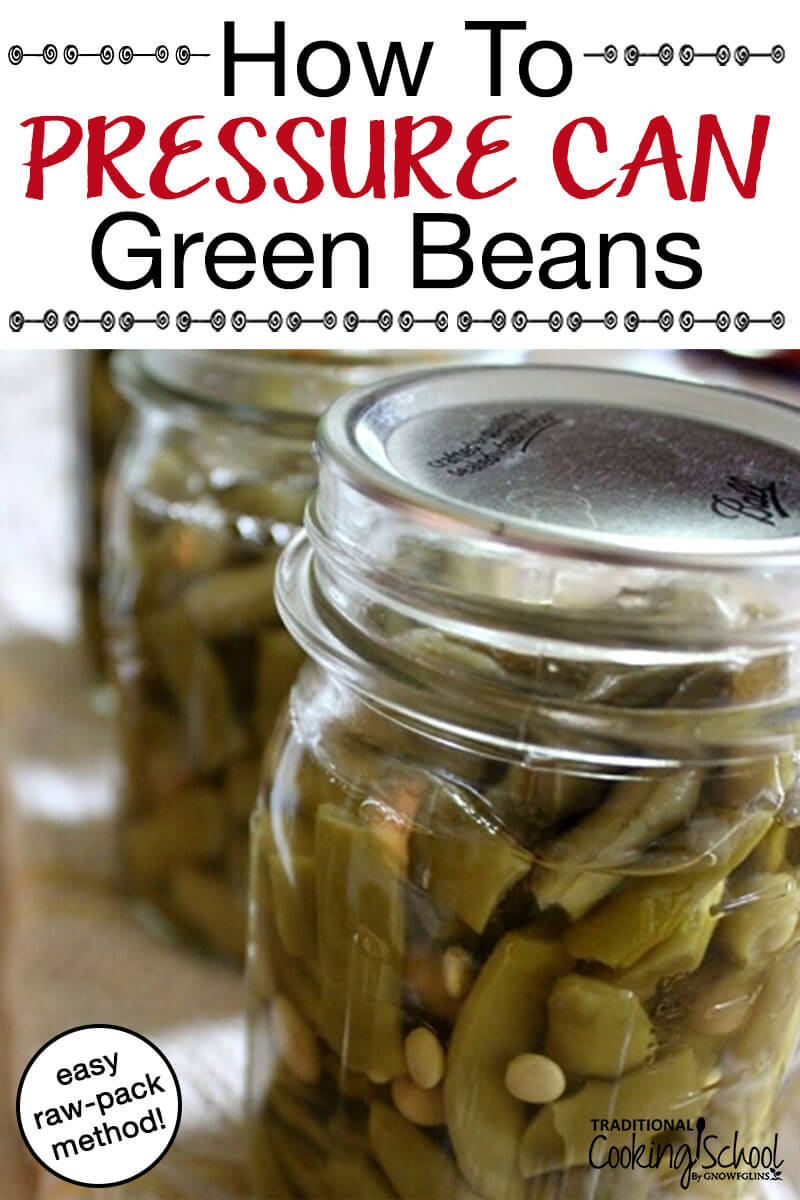
I have a confession to make. I love my pressure canner. Of all my home food preservation tools, my pressure canner is my favorite. I adore that I can cook in it and preserve food for my family, even preserving my food faster with the raw pack method.
If you've never used a pressure canner before, let me ease your fears. It isn't as scary as the stories of your grandmother's canner exploding. They have pressure release valves and safety features built in. As long as you follow the instructions, you're likely good to go.
I'm all for saving time in the kitchen! No woman ever said, "I have way too much time on my hands these days." And if by chance I'm wrong, and you're that woman, would you please come to my house? I need to learn your secrets. 😉
In the interest of saving time, we can't sacrifice food safety. I consider some quick canning methods to be unsafe. Not the raw pack method, though — it's both safe and time-saving. A win-win!
What's The Raw-Pack Method?
It's exactly as it sounds. You pack raw food into jars and then can them (with a pressure canner). No pre-cooking or heating needed.
This works wonderfully well with green beans. I've canned green beans my whole life. My family has been growing and saving the seed from our strain of heirloom green beans for about a hundred years, as far as I can track. We've never purchased green beans from the store. I put up about 80 jars of green beans a year.
Jar Size, Batch Size, and Sterilizing
We can our green beans in pints, but depending upon the size of your family, you may want to do quarts.
Figure out how many jars of the size you're using your pressure canner can hold at a time. And that will tell you how many jars to get ready for a batch.
Because you're using a pressure canner and everything will get sterilized during canning, you don't need to sterilize the jars before hand. Simply wash them in hot soapy water and rinse well.
How To Pressure Can Green Beans Using The Raw-Pack Method
Rinse your beans, string (if they're a string bean), and snap into bite size pieces.
Fill the jars with beans, leaving a 1-inch head space. Push down on the beans to fit a few more in at the end. Add 1/2 teaspoon sea salt for pint jars and 1 teaspoon sea salt for quart jars.
About the salt: I've tried not adding salt to the beans and the flavor isn't the same. I don't add more salt upon reheating. One year I tried canning them without any addition of salt and those jars had to be used in casseroles or soups. The taste was so bland no one would eat them on their own.
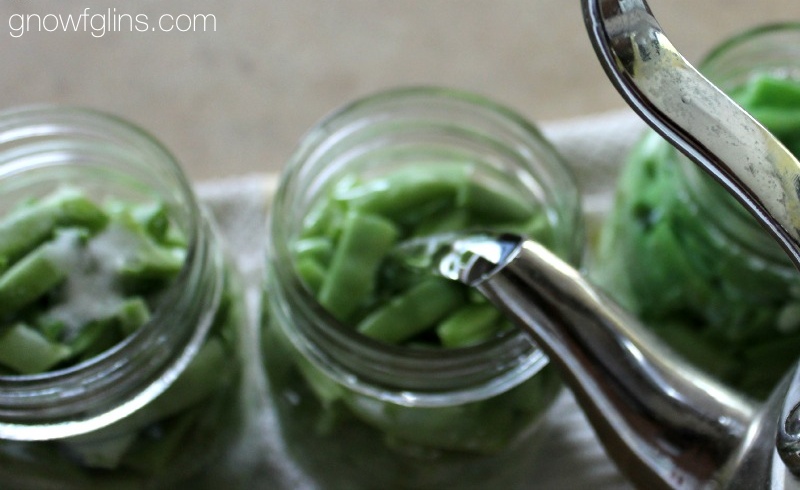
Boil enough water to fill the jars. A pint holds 2 cups and a quart holds 4 cups. You won't need the full amount of water as the beans take up a good capacity. Take the water off a boil and pour into the jars until it just covers the beans. Be sure you leave a 1-inch head space in each jar.
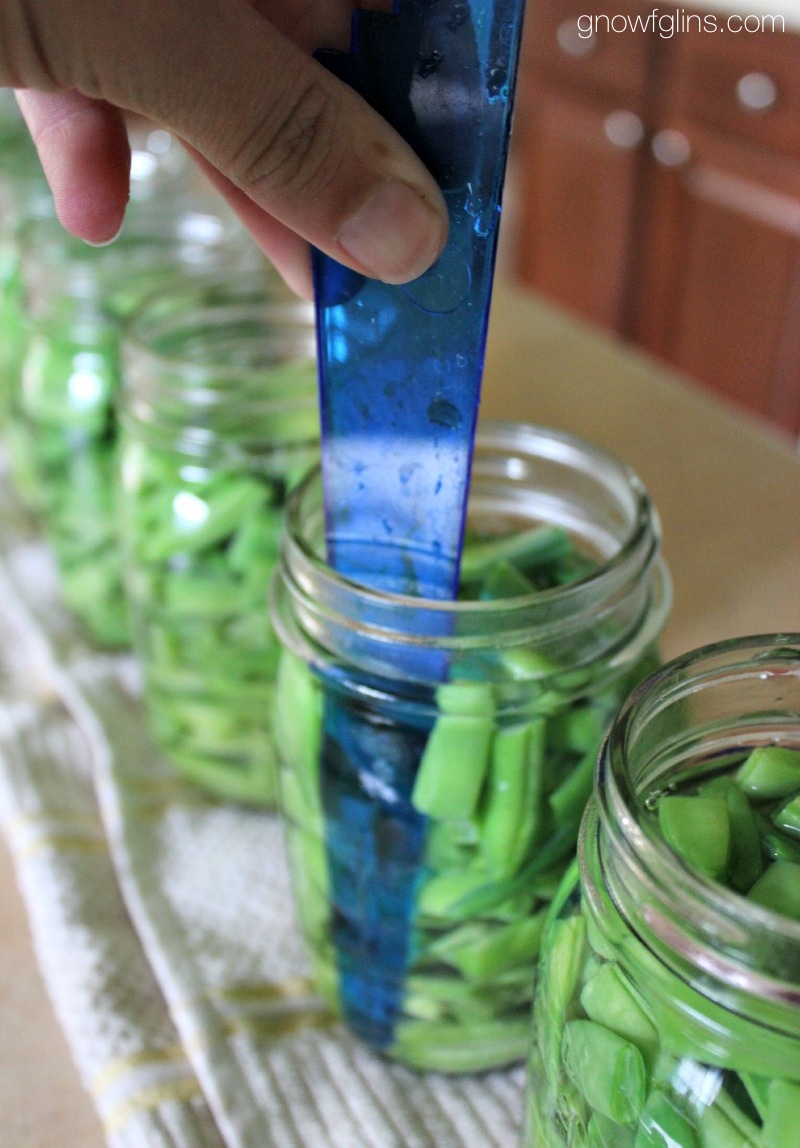
Run a spatula around the side of each jar to release any air bubbles. Wipe the rim with a clean towel to remove any debris or bits that might interfere with jar sealing. Place the lids and rings on the jars and screw them down, fingertip-tight. Place jars in the pressure canner. Make sure the rack is in place. Add amount of water to pressure canner specified for your model. Mine is a quart and half of water.
Place the lid on the pressure canner and turn heat on medium-high. Do not place the pressure control on yet. When steam has vented for 10 minutes, put on the weighted gauge at 10 pounds of pressure. Once control is hissing and jiggling, begin your time. You want to hear the control jiggle about 3 to 4 times a minute. Adjust the heat up or down as needed. Process pint jars for 20 minutes and quart jars for 25 minutes.
When processing time is up, turn off heat. Allow pressure canner to reduce pressure on its own. DO NOT run it under cold water as if you were cooking fresh food. Once pressure is reduced, take a spoon and touch the weighted gauge. If it hisses, allow to cool longer. If it doesn't hiss, remove the weighted gauge with an oven mitt.
Remove the pressure canner lid by tilting it away from your face. Hot steam will still rise even after pressure has reduced. Using an oven mitt or jar lifter, place jars on a towel folded in thirds.
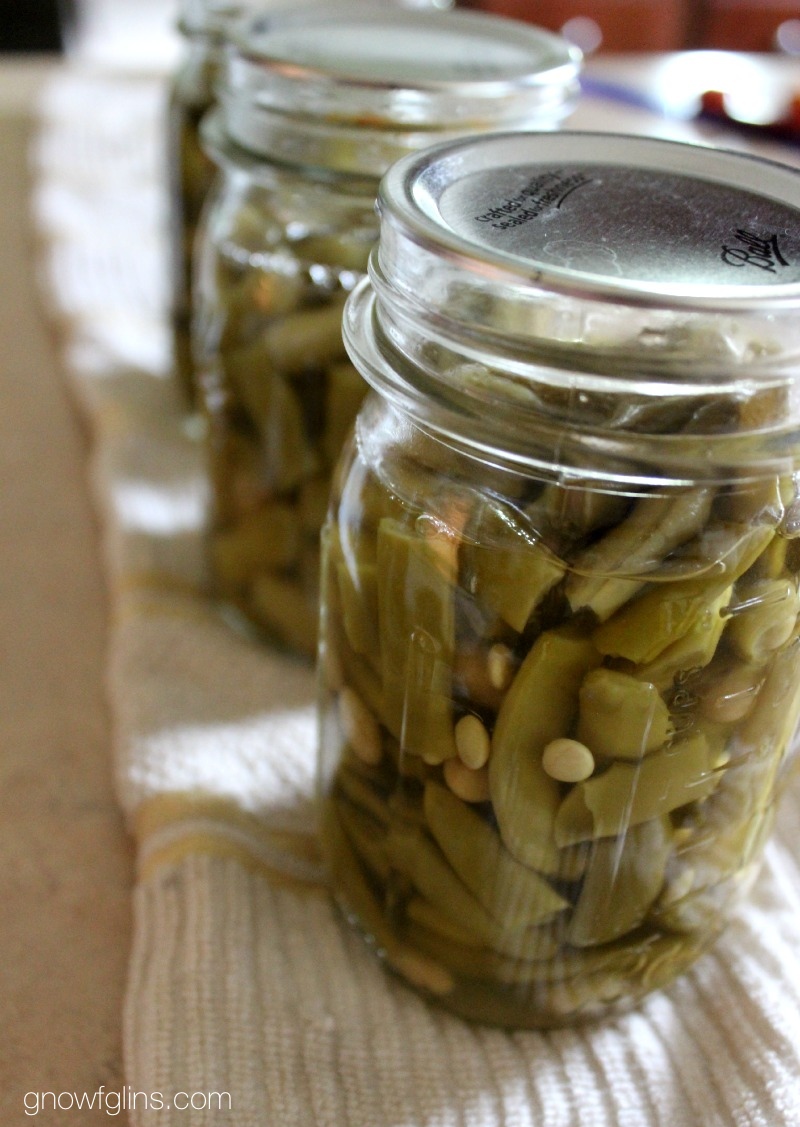
Be sure hot jars are in a draft-free area — and never set hot jars on a bare counter. Allow to cool for at least 12 hours without touching them.
I'm not a patient person and hearing the "ping" of a sealed jar is one of my favorite things ever. But I've started using some of the re-usable Tattler canning lids and while they don't ping, the idea of a re-usable lid is definitely awesome in my book. Curious about how they work? Here's my full review.
Check the seal of each jar, and if any aren't sealed, put in the refrigerator to eat soon. Store sealed jars in a cool dark place. Be sure to mark the jars with the year they were canned so you can practice rotation with your home food stores.
Do you use the raw pack method? What foods do you put up with a pressure canner?
Also see: Getting Started with Pressure Cooking
We only recommend products and services we wholeheartedly endorse. This post may contain special links through which we earn a small commission if you make a purchase (though your price is the same).
how long to pressure cook green beans
Source: https://traditionalcookingschool.com/preserving/how-to-pressure-can-green-beans-raw-pack-method/
Posted by: brownbeffers1998.blogspot.com
0 Response to "how long to pressure cook green beans"
Post a Comment